A grocery list fails when it begins with random items: milk, bananas, chicken, something for lunch. Those products may all be useful, but they do not prove that complete meals are coming home with you.
A reliable weekly grocery list works in the opposite direction. Meals create ingredients; ingredients create quantities; quantities create the list. That sequence makes the list easier to trust and the store easier to leave. It is also the same logic behind a meal planner with an automatic grocery list.
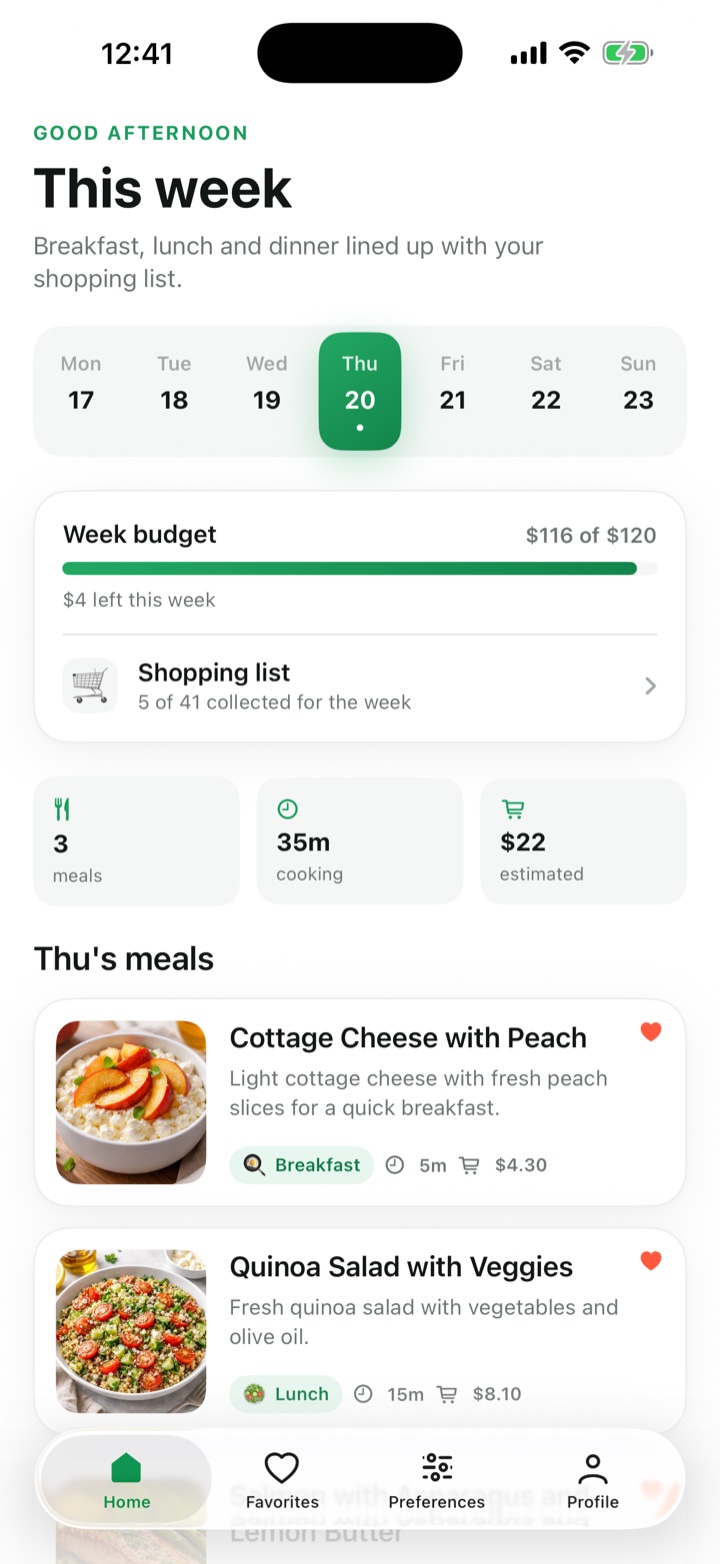
1. Start with the meals, not the aisles
Check your calendar and count how many breakfasts, lunches and dinners need food from this shop. Include planned leftovers and exclude meals out. If your week changes often, leave one slot flexible and keep a pantry or freezer backup rather than buying a fresh meal that may not be used.
If you do not yet have meals chosen, start by assigning realistic meals to the days you will eat at home. A list can only be as accurate as the plan behind it.
2. Make one ingredient pass per meal
Go through each meal and write every ingredient you need, including sides, toppings and basics that are easy to assume. Add quantities immediately. For example:
- Tuesday tacos: 8 tortillas, 1 can black beans, 2 tomatoes, 1 avocado, half a cabbage.
- Wednesday pasta: 12 ounces pasta, 1 can tomatoes, 5 ounces spinach, parmesan.
- Thursday grain bowls: 1 cup dry rice, 1 can chickpeas, 1 cucumber, 2 tomatoes, yogurt.
Quantities make duplicate ingredients visible. They also help you choose a package that fits the plan instead of defaulting to the largest one.
3. Combine duplicate ingredients
Merge every repeated item into one line. The two tomatoes for tacos and two for grain bowls become four tomatoes. If three recipes use onions, total them. This prevents buying the same item twice from different parts of a handwritten list.
4. Subtract what is already in your kitchen
Now check the refrigerator, freezer and pantry. Cross off what you own only after confirming there is enough. “We have rice” is not enough if the container holds half a cup and the plan needs two.
Pay special attention to oils, spices, sauces, flour, grains and frozen ingredients. They are easy to buy again because they are not visible during planning. A quick inventory reduces duplicates and may reveal ingredients that should shape the plan before they expire.
5. Group the grocery list by store section
Organizing the list by aisle makes shopping faster and reduces backtracking. Use categories that match your regular store:
| Section | Examples | Useful note |
|---|---|---|
| Fruit & vegetables | Tomatoes × 4, avocado × 1, spinach 5 oz | Place fragile items together |
| Protein | Chicken 1.5 lb, black beans × 2 cans | Separate fresh and shelf-stable if needed |
| Dairy & chilled | Yogurt 16 oz, parmesan 4 oz | Check opened containers first |
| Pantry | Pasta 12 oz, rice 1 cup dry, canned tomatoes × 1 | Compare unit prices where useful |
| Frozen | Mixed vegetables 1 bag | A dependable backup category |
| Household | Only genuinely needed non-food items | Keep separate from the meal total |
USDA MyPlate recommends checking the kitchen first, planning meals around the week and grouping the list by store section to make the trip quicker and easier.
6. Add a deliberate staples check
After the meal ingredients are complete, check recurring basics: breakfast food, coffee or tea, milk, fruit, sandwich ingredients and household essentials. Keep this list short and based on actual use.
A “just in case” item should solve a known problem. Frozen vegetables for a fast dinner do. Three unassigned sauces because they look interesting usually do not.
How to estimate grocery quantities
Use recipe servings as a starting point, then adjust for your household. If a recipe serves four and two people are eating, decide whether the other two portions are tomorrow’s lunch. If not, halve the recipe and the list.
- Count portions, not people. One person eating dinner and lunch leftovers needs two portions.
- Check package sizes. If tortillas come in packs of eight, plan where the extra two will go.
- Be conservative with perishables. You can add frozen vegetables later; spoiled fresh food cannot be recovered.
- Label flexible amounts. “Enough berries for four breakfasts” may be easier to shop than an exact weight.
Make the list easy to update
Keep one active list in a place everyone in the household can reach. Add staples as they run out, but rebuild the meal section from the new plan each week. Multiple notes, screenshots and messages create duplicates and missed items.
At the store, mark items collected. If something is unavailable, decide whether the meal can use a substitute. Change the ingredient and the plan together so the list still describes complete meals.
Five grocery list mistakes to avoid
- Listing meals but not ingredients. “Tacos” does not tell you whether tortillas are in the pantry.
- Skipping quantities. This encourages arbitrary package sizes and overbuying.
- Combining the plan with a wish list. Unassigned items quietly inflate the bill.
- Forgetting the calendar. Food for nights out becomes waste or an overfull freezer.
- Keeping separate household lists. Duplicate milk is still duplicate milk, even when two people remembered it.
A free printable weekly grocery list template
This template works without an account or app. Print it, count the meals you will eat at home and fill the “use first” line before writing anything to buy.
Weekly meal plan and grocery list
Week of: ____________________ People: ______ Budget: $________
Meals at home
Breakfasts: ______
Lunches: ______
Dinners: ______
Use first
Fridge: ____________________
Freezer: __________________
Pantry: ___________________
Produce
□ _________________________
□ _________________________
□ _________________________
Protein
□ _________________________
□ _________________________
□ _________________________
Dairy and refrigerated
□ _________________________
□ _________________________
□ _________________________
Pantry and frozen
□ _________________________
□ _________________________
□ _________________________
Before leaving, ask one final question: if you buy exactly this list, can you make every planned meal? If yes, it is finished. If not, fix the meal or add the missing ingredient now.
For a list that also controls spending, estimate the expensive items before you shop and adjust the meals while substitutions are still easy. A budget meal planner makes that constraint visible before checkout. To reduce waste, give every perishable item a purpose and a day.
Sources and methodology
This guide combines the workflow used inside Meal Planner with current US government guidance. The recommendations to check food already at home, plan meals, use leftovers and organize the list by store section come from USDA MyPlate. The advice to base the list on meals eaten at home, check the pantry and include quantities is also supported by the US Environmental Protection Agency.