Weekly meal planning is simply deciding what you are likely to eat before hunger, time pressure and an empty fridge start making decisions for you. A useful plan reduces choices during the week. It should not create a second job on Sunday.
The best beginner plan is usually smaller than expected. If you cook four dinners at home, plan four dinners — not seven aspirational ones. If breakfast is always oatmeal, write it once and move on. The goal is a reliable week, not maximum novelty.
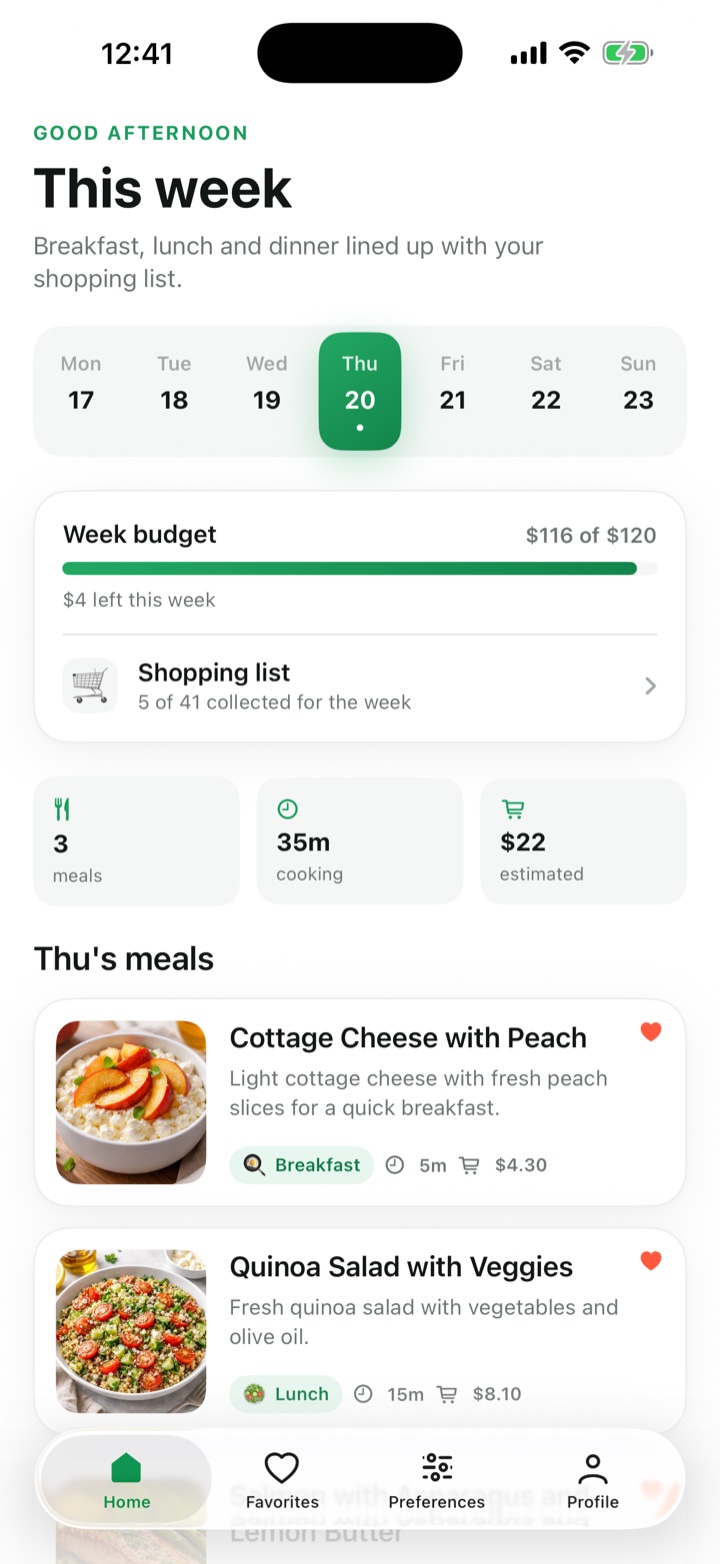
What is weekly meal planning?
A weekly meal plan is a simple map of the meals you expect to eat over the next five to seven days. It connects three things that are often treated separately: your calendar, the food already in your kitchen and the groceries you need to buy.
Meal planning is not the same as cooking everything in advance. That is meal prep. You can plan a week and cook each meal fresh, prep a few ingredients, batch-cook complete dishes, or combine all three. The right approach is the one that removes friction from your actual schedule.
What you need before you start
Set aside about 20 minutes and collect four pieces of information:
- Your calendar: late meetings, activities, travel, social plans and nights when you will not cook.
- A quick kitchen inventory: fresh food that needs using, freezer meals, pantry staples and leftovers.
- Your weekly food budget: a target is more useful than discovering the total at checkout.
- A short list of dependable meals: dishes you already know your household will eat.
USDA MyPlate recommends checking the refrigerator, freezer and cabinets first, writing down meals, considering the time available and planning to use leftovers. Those basics are enough to build a strong system.
How to make a weekly meal plan in seven steps
1. Count the meals you will actually eat at home
Start with the calendar, not recipes. Mark evenings when you will be out, nights that call for leftovers and days when cooking time is limited. Repeat the same check for breakfast and lunch only if those meals vary enough to need planning.
This prevents the most common planning error: buying seven dinners for a week with only four cooking nights.
2. Find the food that needs to be used first
Look for open packages, delicate produce, thawed ingredients and leftovers. Choose one or two of these as starting points. A half bag of spinach might become Tuesday pasta; roasted chicken might become Wednesday wraps.
3. Set the rules for this particular week
Your rules might include a spending limit, two meat-free dinners, a maximum cooking time or one night with no washing up. Constraints make choosing easier. “Any healthy dinner” is an endless search; “a 20-minute vegetarian dinner using the spinach” is a solvable problem.
4. Pick three kinds of meals
A balanced beginner plan can use a simple 3–2–1 pattern:
- Three familiar meals you can make without much thought.
- Two fast or flexible meals such as tacos, grain bowls, omelets or pasta.
- One new meal if you have the time and interest.
Adjust the numbers to the meals you need. The pattern keeps most of the week easy while still leaving room for variety.
5. Reuse ingredients on purpose
Ingredient overlap saves money and reduces half-used packages. If one meal needs cilantro, plan another that can use it. If you roast vegetables, make enough for lunch bowls. Repeating an ingredient does not mean repeating the meal.
6. Match each meal to the right day
Put the fastest meals on your busiest nights and the more involved meals where the calendar has space. Also consider freshness: use delicate greens and seafood early, while pantry meals and frozen ingredients can wait.
7. Convert the plan into one grocery list
Write the quantity needed for every ingredient, subtract what you already have and group the rest by store section. The result should be one list that can be followed from the first aisle to the last.
A realistic weekly meal plan pattern
| Day | Plan | Why it fits |
|---|---|---|
| Monday | 15-minute pasta with spinach | Fast start; uses delicate produce first |
| Tuesday | Sheet-pan chicken and vegetables | Cook extra chicken for tomorrow |
| Wednesday | Chicken wraps with crunchy vegetables | Uses planned leftovers without repeating the dish |
| Thursday | Bean tacos | Low-cost pantry meal for a busy night |
| Friday | Flexible: freezer meal, leftovers or plans out | Absorbs any change from earlier in the week |
| Weekend | One new recipe and one simple favorite | More time for cooking, with one easy fallback |
Notice that this pattern does not assign 21 unique meals. Breakfast can repeat, lunch can use leftovers and a flexible dinner prevents overbuying. The plan is specific enough to shop from but loose enough to survive a changed evening.
Worked example: from constraints to a plan
Suppose one person has a $75 grocery target, cooks dinner four nights, needs lunch leftovers twice and has rice, olive oil and frozen vegetables at home. That is enough information to reject a lot of bad plans before looking for recipes.
| Constraint | Decision it creates |
|---|---|
| Four cooking nights | Plan four dinners, not seven |
| Two lunch leftovers | Make two dinners with a second portion |
| $75 target | Use one low-cost pantry meal and limit one-off ingredients |
| Rice and frozen vegetables on hand | Use them in a grain bowl or stir-fry and leave them off the list |
| One unpredictable evening | Keep a flexible freezer meal instead of buying fresh ingredients |
The output could be spinach pasta, sheet-pan chicken, bean tacos and a rice bowl, with two lunches assigned to leftovers. The point is not these exact meals. It is that every meal has a reason to exist. For a solo version, use the meal planner for one; for a larger household, use the family meal planner.
Common meal planning mistakes
- Planning for your ideal self. Choose meals for your actual energy and available time.
- Starting with recipes instead of the calendar. A perfect recipe still fails on the wrong night.
- Ignoring what is already open. New groceries should complement your kitchen, not bury it.
- Making every meal different. Repeated breakfasts and planned leftovers are useful shortcuts.
- Leaving no backup. Keep one freezer or pantry meal that can replace anything.
- Buying ingredients without quantities. “Tomatoes” is vague; “six tomatoes for two dinners and two lunches” controls waste.
How to make weekly meal planning stick
Use the same planning cue each week: after checking the calendar, before placing a grocery order or while drinking Saturday coffee. Save meals that worked and note why. “Good” is less useful than “good for late Thursday” or “makes an easy lunch.”
After a few weeks, you will have a small library of meal types for different situations: fast nights, low-cost weeks, hot weather, guests and use-it-up days. Planning becomes faster because you are choosing from proven options instead of searching the entire internet.
If time is the main obstacle, shorten the routine to the calendar scan, three dependable dinners and one backup. If cost is the priority, start with the budget and choose meals that deliberately share ingredients.
The five-minute final check
- Does every planned meal have a real place in the calendar?
- Are the most perishable ingredients used early?
- Can at least two ingredients work in more than one meal?
- Is there one fast backup or flexible slot?
- Does the grocery list contain quantities and exclude what you own?
If the answer is yes to all five, the plan is ready. Stop optimizing and start the week.
Sources and methodology
This guide uses the planning workflow implemented in Meal Planner and cross-checks its core recommendations against US government guidance. USDA supports checking food on hand, matching meals to available time and planning leftovers. The EPA recommends building a shopping list from meals eaten at home, checking the pantry and including quantities.
- USDA MyPlate: Make a Plan
- US EPA: Preventing Wasted Food at Home
- FoodSafety.gov: Cold Food Storage Chart